2025 Impact Report: Leading the Culture Forward
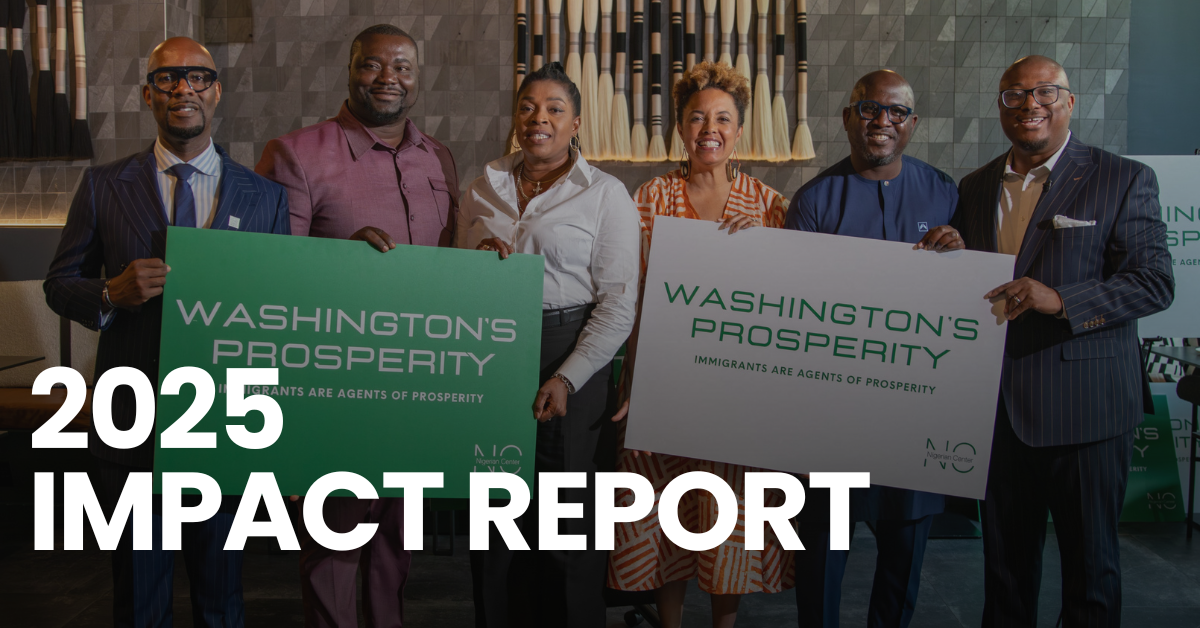
When we entered 2025, we did so with a bold commitment: Leading the Culture Forward.
More than a theme, it was a declaration that the Nigerian Center would fully embrace its role as a national institution advancing social justice, culture, and opportunity for Black immigrants in America.
As America entered a period of significant immigration policy change, our community looked to the Nigerian Center in unprecedented ways. Families sought trusted legal guidance, community organizations sought leadership, and policymakers sought partnership. We answered that call.
Throughout the year, we expanded our work beyond the Washington metropolitan area to support Black immigrant communities nationwide. We transformed our traditional Know Your Rights programming into pop-up immigrant legal clinics, helping individuals and families navigate one of the most consequential shifts in U.S. immigration policy in recent history.
Recognizing that lasting change begins with changing narratives, we launched the Washington's Prosperity Campaign to highlight the economic, civic, and cultural contributions of Black immigrants. We also convened the State of the Union on Immigration on Capitol Hill with national partners to explore how local leadership can strengthen immigrant communities during a time of rapid policy change.
Our advocacy extended beyond public conversations. We testified before the DC Council and Prince George's County, met with congressional offices, and helped lead a national coalition that successfully elevated concerns following Nigeria's designation as a Country of Particular Concern (CPC).
At the same time, we continued investing in opportunity. We expanded workforce development through Upwardly Global, launched a financial education series with TD Bank, provided free tax preparation services, strengthened legal assistance for immigrants, secured federal trademark protection for the Nigerian Center, and launched the Systemic Impact Fellowship to prepare the next generation of policy leaders.
None of this would have been possible without the dedication of our staff, Board of Directors, volunteers, donors, partners, and supporters. We demonstrated what is possible when immigrants are empowered not only to succeed, but to lead. As you read this report, I hope you see more than a year's accomplishments. I hope you see the continued emergence of an institution helping redefine what is possible for Black immigrants in America.
Thank you for believing in our mission and for helping us continue Leading the Culture Forward.
With gratitude,
Gbenga Ogunjimi
Executive Director - Nigerian Center